
Sustainability is no longer a marketing layer added to cleaning contracts. It is now tied directly to compliance, tenant expectations, ESG reporting, and long-term operational cost control.
Across Canada and the United States, facility managers are under pressure to adopt Eco-Friendly Cleaning practices. This shift is not just about using green-labelled products. It requires alignment with recognized certifications, proper chemical handling, equipment upgrades, and staff training protocols.
For buyers of Cleaning Services in Canada, the challenge is not finding vendors who claim to be green. The real challenge is understanding which certifications matter, how they impact daily operations, and whether a cleaning provider can actually deliver against those standards on site.
This guide explains eco-friendly cleaning certifications from a field operations perspective. It breaks down how they influence chemical selection, staffing, workflows, audits, and vendor evaluation.
What Eco-Friendly Cleaning Really Means in Operations
Beyond Marketing Labels
In practice, eco-friendly cleaning is defined by three core operational factors:
- Reduced environmental impact
- Safer chemical exposure for workers and occupants
- Sustainable resource usage such as water and energy
A certified green program must demonstrate measurable improvements in these areas.
Why Certifications Matter in Cleaning Services
Without certifications, claims of sustainability are difficult to verify.
Certifications provide:
- Standardized criteria for chemical safety
- Verified environmental impact benchmarks
- Accountability through audits and compliance checks
For procurement teams, this removes ambiguity when comparing vendors offering Cleaning Services in Canada.
Key Eco-Friendly Cleaning Certifications in Canada and the U.S.
Green Seal Certification
Green Seal is one of the most recognized certifications in North America.
It evaluates:
- Toxicity levels of cleaning chemicals
- Biodegradability
- Packaging sustainability
Operational impact:
Facilities using Green Seal products typically reduce chemical-related complaints such as skin irritation and odors.
UL ECOLOGO Certification
UL ECOLOGO is widely used in Canada.
It focuses on:
- Lifecycle environmental impact
- Product performance validation
- Reduced aquatic toxicity
Field insight:
Many government and institutional contracts require ECOLOGO-certified products as a baseline.
LEED (Leadership in Energy and Environmental Design)
LEED is not a cleaning certification alone but includes cleaning practices under building operations.
It requires:
- Sustainable purchasing policies
- Green cleaning protocols
- Documentation of compliance
Example:
A commercial office pursuing LEED certification must prove that its janitorial services align with approved green standards.
ISSA CIMS-Green Building Certification
This applies directly to cleaning organizations.
It evaluates:
- Service delivery processes
- Environmental stewardship
- Quality management systems
Why it matters:
This certification reflects not just product usage but how professional cleaning services are executed on site.
How Certifications Influence Daily Cleaning Operations
Chemical Selection and Use
Certified programs restrict:
- Harsh solvents
- High-VOC products
- Non-biodegradable agents
This changes how cleaning teams approach:
- Degreasing
- Disinfection
- Stain removal
Operational challenge:
Eco-friendly chemicals often require more precise application and dwell time.
Dilution Systems and Control
Green cleaning programs rely heavily on:
- Closed-loop dilution systems
- Pre-measured chemical dispensing
What happens without control:
- Overuse increases environmental impact
- Underuse reduces cleaning effectiveness
Real scenario:
A contractor switched to eco-certified chemicals but did not adjust dilution systems. Result: ineffective washroom cleaning and increased complaints.
Equipment Selection
Eco-friendly cleaning often requires upgraded equipment:
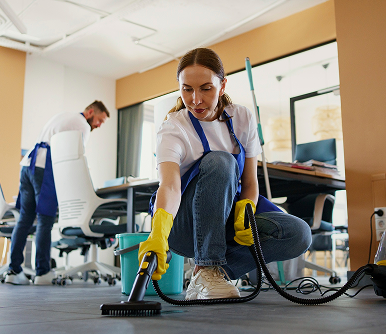
- HEPA vacuums to improve indoor air quality
- Low-moisture carpet cleaning systems
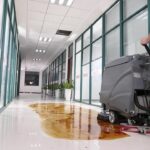
- Auto scrubbers with water-saving technology
Operational reasoning:
Reducing water and chemical usage is as important as selecting green products.
Cleaning Procedures Under Eco-Friendly Standards
Surface-Specific Protocols
Eco-certified cleaning changes procedures for:
- Floors: neutral pH cleaners instead of harsh strippers
- Glass: ammonia-free solutions
- Washrooms: low-toxicity disinfectants with strict dwell time
Microfiber Systems and Cross-Contamination Control
Microfiber is standard in eco-friendly cleaning because:
- It reduces chemical usage
- It improves soil removal efficiency
Color-coded systems prevent cross-contamination between:
- Washrooms
- Food areas
- General office spaces
Dwell Time, Disinfection, and Compliance Risks
The Balance Between Eco-Friendly and Effective Disinfection
One of the biggest operational challenges is balancing:
- Environmental safety
- Pathogen control
Key issue:
Some eco-friendly disinfectants require longer dwell times.
What Happens When Dwell Time Is Ignored
- Pathogens remain active
- Infection control fails
- Liability increases
Field example:
During a flu season, a building switched to a greener disinfectant but did not adjust cleaning times. Result: increased illness complaints from tenants.
Staffing, Training, and Workflow Adjustments
Training Requirements
Eco-friendly cleaning requires additional training in:
- Chemical handling
- Dilution systems
- Waste reduction practices
Untrained staff often:
- Overuse products
- Misapply procedures
- Reduce overall effectiveness
Staffing Implications
Green cleaning can require:
- Slightly longer cleaning times
- More attention to detail
- Increased supervision
Reality:
Cutting staffing while implementing eco-friendly protocols usually leads to service decline.
Workflow Changes
Typical adjustments include:
- Reduced chemical usage with more mechanical cleaning
- Increased emphasis on microfiber and equipment
- Structured waste sorting and recycling
Quality Assurance and Certification Compliance
Documentation Requirements
Certified programs require:
- Product logs
- Training records
- Inspection reports
Audits and Inspections
Facilities may undergo:
- Internal audits
- Third-party certification checks
Common failure point:
Lack of documentation, even when practices are compliant.
Common Operational Failures in Eco-Friendly Cleaning
Incorrect Product Substitution
Switching to non-certified products due to cost pressures can:
- Void certification compliance
- Increase risk exposure
Improper Dilution Ratios
Even eco-certified products become ineffective if diluted incorrectly.
Ignoring Cross-Contamination Controls
Using the same tools across areas spreads bacteria, regardless of how green the product is.
Inadequate Staff Training
Green cleaning systems are less forgiving than traditional methods.
Cost vs Sustainability Trade-Offs
Higher Upfront Costs
Eco-certified products and equipment often cost more initially.
Long-Term Savings
Savings come from:
- Reduced health complaints
- Lower absenteeism
- Extended asset life
Budget Constraints
Organizations must balance:
- Certification requirements
- Operational budgets
- Service expectations

In-House vs Outsourced Eco-Friendly Cleaning
In-House Challenges
- Training burden
- Certification management
- Equipment investment
Outsourced Advantages
Professional providers offering commercial cleaning and office cleaning services often already have:
- Certified systems
- Trained staff
- Established QA processes
Vendor Selection for Eco-Friendly Cleaning Services
What Procurement Teams Look For
- Verified certifications
- Documented cleaning processes
- Staff training programs
- Experience with similar facilities
Questions to Ask Vendors (See Details)
- Which certifications do you hold
- How do you manage chemical dilution
- What training do your staff receive
- How do you track compliance
H3: Red Flags
- Vague sustainability claims
- No documentation
- Lack of site-specific planning
Real-World Case Scenario
A multi-tenant office building in Toronto transitioned to Eco-Friendly Cleaning to meet ESG targets.
Challenges faced:
- Increased cleaning time due to new procedures
- Staff resistance to new systems
- Initial tenant complaints about cleaning effectiveness
Solutions implemented:
- Additional training sessions
- Adjusted staffing levels
- Improved communication with tenants
Outcome:
- Reduced chemical exposure complaints
- Improved audit scores
- Stabilized cleaning quality within three months
FAQs
1. What is the difference between green cleaning and eco-friendly cleaning?
Green cleaning typically refers to the use of environmentally safe products, while eco-friendly cleaning includes a broader operational approach. This includes equipment, water usage, waste reduction, and staff practices. Certifications ensure that both product and process meet defined standards rather than relying on claims alone.
2. Are eco-friendly cleaning products as effective as traditional chemicals?
Yes, but only when used correctly. Many eco-certified products require proper dilution, correct dwell time, and appropriate application methods. When these factors are ignored, performance drops. Proper training and supervision are critical to achieving results comparable to traditional chemicals.
3. Do eco-friendly cleaning services cost more?
Initial costs may be higher due to certified products and equipment. However, long-term benefits include improved indoor air quality, fewer complaints, and reduced wear on surfaces. Over time, these factors can offset the higher upfront investment.
4. How can I verify a cleaning company’s certifications?
Ask for documentation and verify it through official certification bodies. Reputable providers will provide proof of compliance and explain how certifications are implemented in daily operations, not just listed in proposals.
5. What are common mistakes when switching to eco-friendly cleaning?
Common issues include poor staff training, incorrect dilution ratios, and unrealistic staffing levels. Organizations often underestimate the operational changes required, leading to short-term declines in cleaning quality.
6. How do eco-friendly practices impact indoor air quality?
They significantly improve indoor air quality by reducing VOC emissions and airborne particles. The use of HEPA filtration and low-toxicity chemicals helps create a healthier environment for occupants, especially in high-density office settings.
7. Is eco-friendly cleaning suitable for all facility types?
Yes, but implementation varies by environment. Healthcare and industrial facilities may require hybrid approaches that balance sustainability with strict hygiene requirements. A customized plan is essential for effective results.
Eco-friendly cleaning certifications are not just labels. They directly shape how cleaning services are delivered, monitored, and improved.
For organizations sourcing Cleaning Services in Canada, understanding these certifications provides a clear advantage. It allows you to evaluate vendors based on real operational capability rather than surface-level claims.
The key is not just choosing eco-friendly products but ensuring the entire cleaning system supports sustainability without compromising performance.
Next step:
Review your current cleaning scope and vendor capabilities. If eco-friendly compliance is a priority, align your RFQ requirements with recognized certifications and measurable performance standards.